There's a particular kind of email no founder wants to open. You've picked the name, bought the domain, designed the logo, maybe even shipped — and then a certified letter arrives from a company's legal team informing you that the name you built everything on infringes their trademark, and would you kindly hand over the domain and cease all use. It happens more than people think, and it is almost always avoidable.
I've spent 25 years in the domain business as an investor and writer, and the single most expensive mistake I watch newcomers make isn't overpaying for a name. It's skipping the trademark check — treating "is the domain available to register" as the same question as "is this name safe to use." They are not the same question, and the gap between them is where brands go to die.
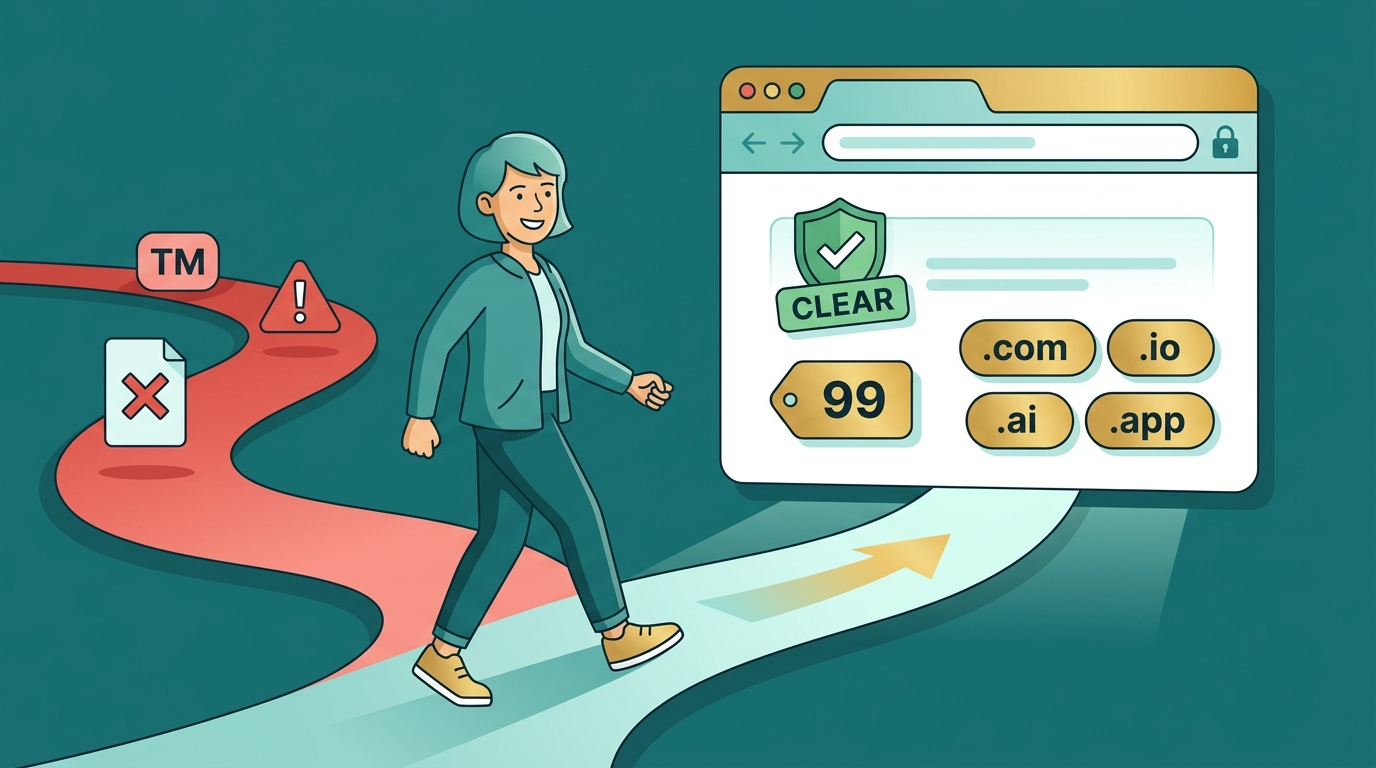
The good news: a real domain trademark check takes about 15 minutes and costs nothing. This guide walks through exactly how to run one, what the results mean, and how to decide whether a name is safe, risky, or a hard stop — before you spend a dollar building on it.
Why "available to register" doesn't mean "safe to use"
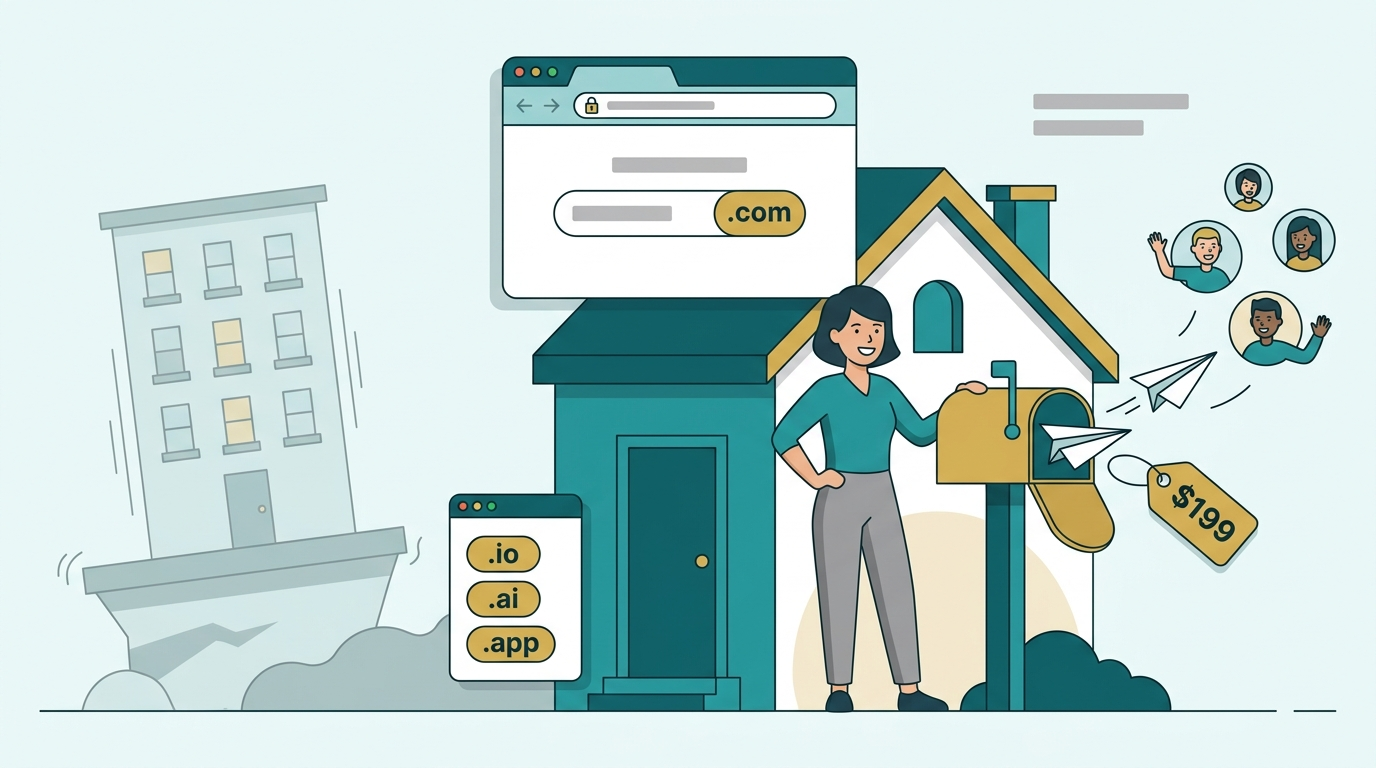
Domain registration and trademark law are two completely separate systems that most people assume are connected. They aren't.
A registrar checks one thing: has this exact string already been registered by someone else? If brightledger.com is unregistered, you can buy it. What the registrar does not check is whether "BrightLedger" is a registered trademark for accounting software, owned by a company that will object the moment you launch a competing fintech product on that name.
Trademark rights don't attach to a domain. They attach to a name used in commerce to identify a source of goods or services. That means a name can be totally available as a domain and totally unsafe as a brand at the same time. It also means the reverse: two businesses can legitimately use similar names in unrelated industries, which is why a plumbing company and a software startup can both be "Delta" without a problem.
This is the trap. The checkout flow makes buying a domain feel like a settled, low-stakes purchase. The trademark system is invisible during that flow, and it doesn't send you a warning — it sends you a cease-and-desist months later. The whole point of a prescreen is to surface that invisible system before you commit.
How bad can it actually get? The 2026 reality
This isn't a hypothetical risk that lawyers inflate to sell services. The numbers are real and they're rising.
According to the World Intellectual Property Organization, trademark owners filed 6,168 domain name cases in 2024 under the UDRP and related policies — the second-busiest year in the 25-year history of the service, involving parties from 133 countries. United States parties alone filed 2,157 of them. The most active industries were banking and finance, pharmaceuticals, internet and IT, and retail — which is to say, exactly the sectors most startups launch into.
Here's what a trademark collision can actually cost you, in rough order of pain:
- The domain itself. If a UDRP panel rules against you, the registrar is ordered to transfer or cancel the name. You lose it, plus whatever you paid.
- The brand equity built on it. Every backlink, every printed business card, every bit of SEO and word-of-mouth attached to that name evaporates in a rebrand.
- The rebrand cost. Changing a domain after launch means a full migration — new name, new assets, 301 redirects, lost traffic. I've written about the warning signs that force a startup rebrand, and an avoidable trademark hit is the most frustrating trigger on that list because it was preventable in 15 minutes.
- Legal exposure. In genuine infringement cases, damages and attorney's fees can dwarf everything above.
The prescreen exists to keep you out of that 6,168.
Where to run a domain trademark check (all free)
You don't need paid tools to catch the conflicts that cause most problems. Three official databases cover the ground, and all three are free to search.
1. The USPTO (United States)
The USPTO trademark search system is the first stop for any U.S.-facing brand. Search your exact name, then search close variants — different spellings, plurals, and phonetic matches ("Brite" for "Bright"). Pay attention to the status (live vs. dead) and the goods and services each mark covers. A live mark in your exact category is a red flag; a dead mark or one in a wholly unrelated class usually isn't.
2. The EUIPO (European Union)
If you'll do any business in Europe, search the EUIPO eSearch plus database for EU trade marks and designs. A name clear in the U.S. can be locked up in the EU, and vice versa — trademark rights are territorial, not global.
3. WIPO (international disputes)
The WIPO Guide to the UDRP is where you learn how domains actually get taken, and WIPO's decision database lets you see how panels have ruled on names like yours. Reading two or three past decisions in your industry is the fastest way to calibrate your own risk.
Beyond the official registries, do a plain web search and a social-handle check. Common-law trademark rights can exist without any registration at all — a company that has been using a name in commerce may have enforceable rights even if it never filed. If someone is already operating a real business under your name in your space, that matters regardless of what the databases say.
What the results actually mean: likelihood of confusion and classes
Finding a similar mark isn't automatically a stop sign. Two concepts decide whether it's a real problem. (This is a practical framing, not legal advice — when a name matters, confirm with a trademark attorney.)
Likelihood of confusion is the core test. Trademark law doesn't ask "is this name identical?" It asks "would a normal consumer likely be confused about who's behind this product?" That turns on how similar the names look and sound, how related the goods or services are, and how the two brands reach customers. Identical names in unrelated industries often coexist fine. Similar names in the same industry are where trouble lives.
Trademark classes are the reason industry matters so much. Marks are registered within a system of 45 international classes — roughly, categories of goods and services. A mark registered in the class covering software gives its owner rights against confusingly similar software brands, not against a bakery using the same word. This is the single most useful concept for a domain buyer, and it's the one most quick guides skip: your risk is concentrated in your own class. A same-name mark three industries away is usually noise; a similar-name mark in your exact class is the signal.
Here's how those two ideas combine into a fast risk read:
| Scenario | Likelihood of confusion | Verdict |
|---|---|---|
| Generic dictionary word, used descriptively | Very low — no one owns the plain word | Safe |
| Coined/brandable name, no similar mark anywhere | Very low | Safe |
| Similar mark, but a different industry/class | Low | Usually safe — verify |
| Similar-sounding mark in your exact class | High | Risky — get advice |
| Near-identical to a famous brand, any class | High (famous marks get broad protection) | Hard stop |
| Deliberate typo of a known brand | Presumed bad faith | Hard stop |
How a domain gets taken: the three-part UDRP test
If you understand nothing else about domain trademark risk, understand this: a trademark owner cannot simply take your domain because they don't like it. Under the UDRP, they must prove all three of these elements to a panel:
- Identical or confusingly similar. The domain is identical or confusingly similar to a trademark the complainant has rights in.
- No rights or legitimate interests. You have no legitimate interest in the name — you're not genuinely using it, or preparing to, for a bona fide purpose.
- Bad faith registration and use. You both registered and used the domain in bad faith — for example, to sell it to the trademark owner at a markup, to divert their traffic, or to trade on their reputation.
The "all three" part is your protection. A clear typosquat of a famous brand fails all three tests instantly, which is why those cases are lost routinely. But a generic word, a coined name, or a name you're honestly building a real product on defeats element two or three even if it superficially resembles someone's mark. The UDRP is a cybersquatting remedy, not a general "I want that name" button. Good-faith registrants who lose a UDRP can also file a lawsuit within ten business days to halt the transfer.
This is why the safest domains aren't the cleverest ones — they're the ones with an obvious, defensible reason for you to own them.
The safest names to buy (and why curated helps)
Given everything above, a clear hierarchy emerges. The lowest-trademark-risk domains tend to be:
- Generic dictionary words used descriptively — nobody owns the plain word.
- Coined or invented words with no prior meaning — there's nothing existing to confuse them with. (This is one reason brandable names are so durable; I break down the trade-offs in keyword domains vs. brandable domains for SEO.)
- Distinctive multi-word combinations that don't echo an existing brand in your space.
The genuine danger zone is a name that sounds established in your industry — which, ironically, is often exactly the kind of name founders are drawn to because it feels credible.
This is where buying from a curated marketplace changes the math. On the raw aftermarket, every name is your own gamble: you're responsible for the entire history check. On a screened marketplace, listings are vetted for clean history and obvious trademark conflicts before they go live, which filters out a whole category of landmines before you ever see them. It doesn't replace your own prescreen — territorial rights and your specific industry are things only you can judge — but it removes the worst offenders from the pool.
The brandable and coined names below are the kind that carry the least trademark baggage, and every one is $199 or less:
For names you can build a product on directly, the same low-risk logic applies to our curated brandable collection — distinctive, coined, and screened, without the five-figure aftermarket price tag. If you want to understand what makes these names hold their value beyond the legal safety, domain valuation explained covers the pricing side.
Traditional legal clearance vs. a 15-minute prescreen
You'll see two very different approaches recommended online. Here's how they compare, and when each is right.
| Approach | Full legal clearance | The 15-minute prescreen |
|---|---|---|
| Who does it | Trademark attorney | You, before you buy |
| Cost | $150–$600+ per search | Free |
| Time | Days to weeks | 15 minutes |
| Coverage | Comprehensive, common-law, opinion letter | Obvious conflicts in official databases |
| When it's right | Before committing real money or building a company | Every single domain purchase, always |
These aren't competitors — they're sequential. The prescreen is the always-on filter you run on every candidate name; the full clearance is the deeper check you pay for once a name survives the prescreen and the stakes justify it. Skipping the prescreen to "save time" is the false economy that fills WIPO's docket.
Your 15-minute domain trademark prescreen checklist
Run this on every finalist name before you buy. If any step throws a hard conflict in your industry, stop and either pick another name or get an attorney's opinion.
- USPTO search (5 min). Search the USPTO trademark database for the exact name and 2–3 close variants. Note any live marks and which class/goods they cover.
- EUIPO search (2 min). If you'll touch Europe, repeat on EUIPO eSearch. Rights are territorial.
- Web + social sweep (3 min). Google the exact name plus your industry keyword. Check the social handles you'd want. You're hunting for common-law users the registries won't show.
- Class check (2 min). For any similar mark you found, ask: is it in my industry/class? Different class is usually noise; same class is the signal.
- Confusion gut-check (2 min). Say your name and the similar mark out loud. Would a normal customer confuse the source? Be honest.
- Decision (1 min). Map your result onto the risk table above: Safe → buy. Usually safe → buy but document your reasoning. Risky or hard stop → new name or a lawyer.
Fifteen minutes. That's the entire price of not being one of the 6,168.
The bottom line: clear it before you build on it
The competitors ranking for "domain trademark check" will tell you trademark disputes are scary and expensive, and they're right. What most of them bury is how simple the prevention is. You don't need to be a lawyer to catch the conflicts that cause the overwhelming majority of problems — you need 15 minutes, three free databases, and the discipline to run the check before you fall in love with a name.
Do it in the right order: search first, buy second, build third. A name that clears a prescreen and has an obvious, defensible reason for you to own it is worth far more than a marginally catchier one sitting on a legal fault line. And if you'd rather start from a pool that's already been screened for clean history and obvious conflicts, browse our curated marketplace — every listing is AI quality-vetted and owner-verified, and every one is $199 or less, ready to transfer within 72 hours. When you've got a shortlist, the psychology of naming a startup and our app-naming guide will help you pick the winner with confidence.