If you've shopped for a brandable startup name, you've probably ended up on Brandpa or BrandBucket — the two marketplaces that pioneered the "curated name plus a matching logo" model. Beautiful cards, invented words, a designer logo on every listing, and prices that start in the high hundreds and run into seven figures. And somewhere in that browsing session, the question every early-stage founder eventually asks out loud: why does a made-up eight-letter word cost more than my first month of runway?
I've been buying and selling domains for 25 years, and I'll say up front: Brandpa and BrandBucket are both legitimate, well-run marketplaces. This isn't a takedown. But "well-run" and "right for you" are different questions, and the brandable-domain business is very good at blurring them — especially when the same name can carry three different price tags depending on which storefront you're standing in. So here's the honest head-to-head: minimum prices, commission models, curation, logo bundles, transfer speed — and then a decision tree so you can tell in about two minutes which marketplace actually fits your situation.
What Brandpa actually is
Brandpa is a curated marketplace for brandable, mostly invented .com names, each paired with a professionally designed logo. Submission is fast and largely automated: you list a name, Brandpa's system suggests a valuation, and approved names go live with a designer logo and marketing exposure attached.
The pricing floor is the key fact. On Brandpa, domains must be listed at a minimum of $1,000, and that floor only softens to $495 after a name has sat unsold for at least 90 days. Listings generally top out around $50,000 unless the platform approves a higher valuation. On the seller side, Brandpa's commission is tiered: sellers keep 75% below $50,000 (a 25% cut), 80% between $50K and $100K, and 85% above $100K. There's no listing fee, and the logo design is free to the seller — Brandpa's designer creates it and the platform markets individual names online.
None of that is a knock. If you want an invented, ready-to-brand .com with a logo already made and a four-figure budget to match, Brandpa does exactly what it says. The friction only appears when a founder with a few hundred dollars lands on a marketplace whose front door is bolted shut below $1,000.
What BrandBucket actually is
BrandBucket is the older, larger cousin — one of the original brandable-name marketplaces, also built on the name-plus-logo bundle. Its curation is famously strict and historically slower (approvals have taken 30 days or more), which is part of how it maintains a consistent, premium house style.
BrandBucket's listed prices generally run from about $710 into seven figures, and it charges a $1 appraisal fee per domain to keep submission quality high. Its seller commission is steeper and more tiered than Brandpa's: 30% on names below $10,000, 25% from $10,000 to $49,999, 20% from $50,000 to $99,999, and 15% above $100,000. It also runs lease-to-own plans, with a sliding fee (starting around 15% and dropping to 5%) split between BrandBucket and the seller. Inventory is dominantly .com with a handful of other extensions like .io.
Again — this is a real, reputable operation with a huge catalog and a polished buyer experience. But a 30% commission on a sub-$10K name is a lot of overhead baked into the sticker, and that overhead is the whole reason the sticker starts in the high hundreds.
What 199.domains is (and isn't)
199.domains is built around a single, deliberately restrictive rule: every domain is $199 or less, one fixed price shown up front, set by the seller (or our team) on a ladder from $29 to $199. No auctions, no "make an offer," no negotiation, and no commission stacked on top of your price. Every listing is AI quality-vetted and DNS owner-verified before it goes live, and once you buy, the transfer is initiated within 72 hours with a full refund if it can't be completed. On the selling side, sellers keep up to 81% (the fee is 19% on sales of $50+, 25% under $50).
Here's what it is not: it does not bundle a logo, and it is not trying to sell you a $1.5 million one-word .com. It's a marketplace for clean, brandable, buildable names priced to actually sell — the kind of name a solo founder, indie developer, or bootstrapped team can buy this week and launch on next week. The hard ceiling is the whole product. It's what lets you skip the entire apparatus — strict luxury curation, logo bundles, escrow on five-figure deals, lease-to-own financing — that only exists because the prices elsewhere are high enough to require it.
If you want the deeper argument for why a fixed ceiling beats open-ended premium pricing, where to buy a domain name compares the total cost of registrars, auctions and fixed-price marketplaces, and our earlier head-to-head, 199.domains vs. Atom (Squadhelp), covers the same debate against the ultra-premium end of the market.
The honest head-to-head
Here's the comparison the way I'd lay it out for a founder across a table — crediting Brandpa and BrandBucket where they earn it, and being straight about the tradeoffs on all three.
| Feature | Brandpa | BrandBucket | 199.domains |
|---|---|---|---|
| Minimum price | $1,000 (→ $495 after 90 days) | ~$710 | $29 |
| Typical range | $1,000 to ~$50,000 | ~$710 to seven figures | $199 or less, always |
| Pricing model | Seller-set, auto-suggested, $1K floor | Seller-set, curated, raiseable | One fixed price, $29–$199 ladder |
| Seller commission | 25% (below $50K) | 30% (below $10K) | Up to 81% kept (19% fee $50+) |
| Curation | Automated review, fast | Strict human review, slower | AI quality-vetted + DNS owner-verified |
| Logo bundle | Yes, included | Yes, included | No — keep the budget for the build |
| Appraisal / listing fee | None | $1 per domain | None |
| TLD focus | .com only | Mostly .com, some .io | All TLDs (.com, .ai, .io, .app, .co…) |
| Financing | No | Lease-to-own available | Not needed — pay once, it's ≤ $199 |
| Transfer timeline | Standard escrow | Standard escrow / lease term | Initiated within 72 hours |
| Primary buyer | Funded startups wanting a logo | Established brands, agencies | Indie devs, bootstrappers, early founders |
Two rows deserve a note. First, commission: Brandpa's 25% and BrandBucket's 30% are seller-side numbers, but they're baked into the asking price you pay as a buyer — they're not wrong, they're just the economics of a high-touch, logo-bundled marketplace. On 199.domains the seller keeps up to 81%, which is possible precisely because there's no expensive curation-and-logo layer to fund. Second, the logo bundle: it's a genuine perk if you need a polished mark on day one, but it's also a chunk of why a name can't be listed below $710 or $1,000 in the first place.
Why the same domain costs three different prices
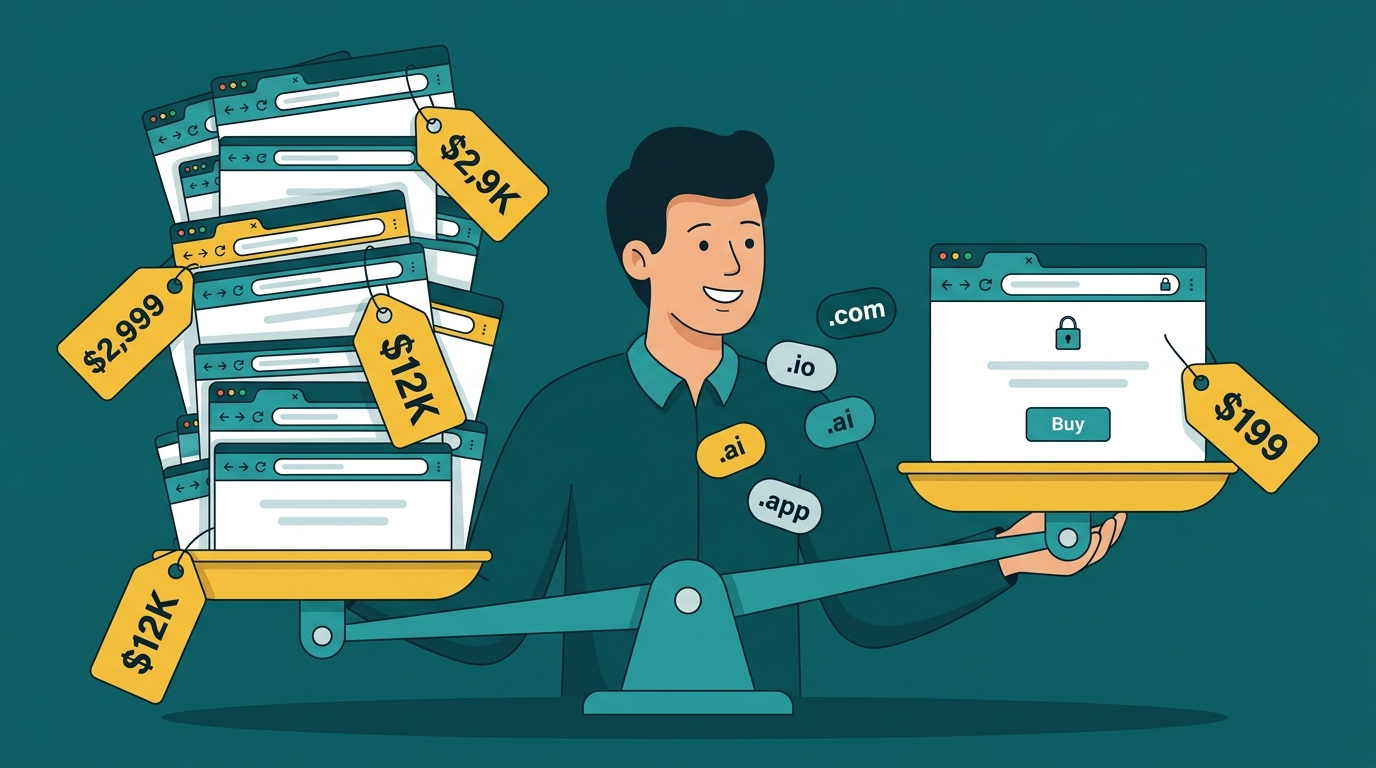
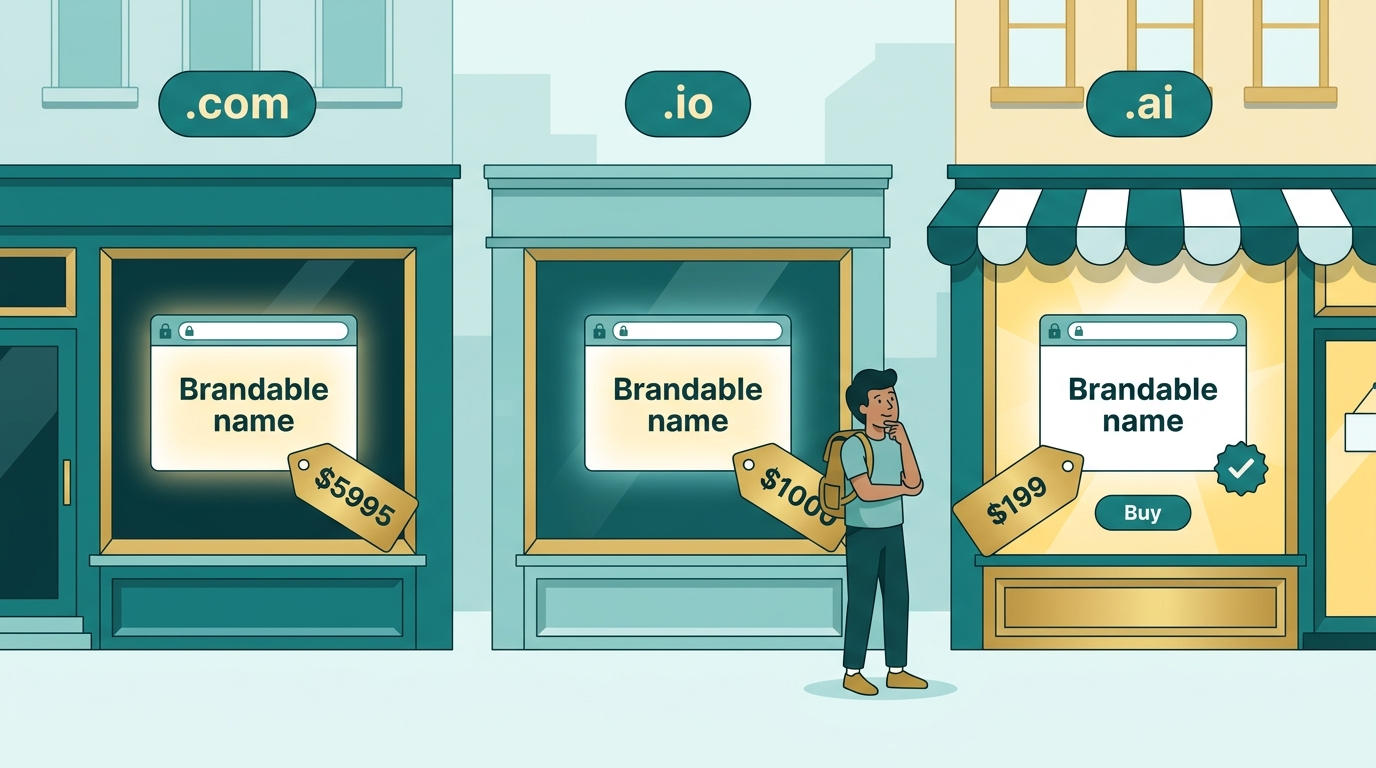
This is the part that confuses people, so let's be direct about it. A brandable two-word .com can be listed at $2,899 on one marketplace and $5,995 on another for the same name — a spread I've watched play out more than once, and one that domain-community forums like NamePros document constantly. Sellers routinely list identical names across Brandpa, BrandBucket, and others at different numbers to see what a buyer will tolerate.
Price on premium marketplaces is not a fixed property of the domain. It's a function of three things:
1. The venue's commission structure
BrandBucket needs its 30% and Brandpa needs its 25%, so the same seller floor produces a higher sticker on the pricier platform. The commission isn't a line item you see — it's absorbed into the number on the card.
2. The bundled extras
A designer logo, marketing exposure, and strict curation all cost money to provide, and that cost lives inside the price. You're not just buying a string of letters; you're buying the apparatus around it, whether or not you need the apparatus.
3. What the seller thinks you'll pay
On open-ended marketplaces, the listed price is a guess about a funded buyer's tolerance. The more premium the venue's positioning, the higher that guess. That's why the same name reads as $2,899 in one window and $5,995 in the next.
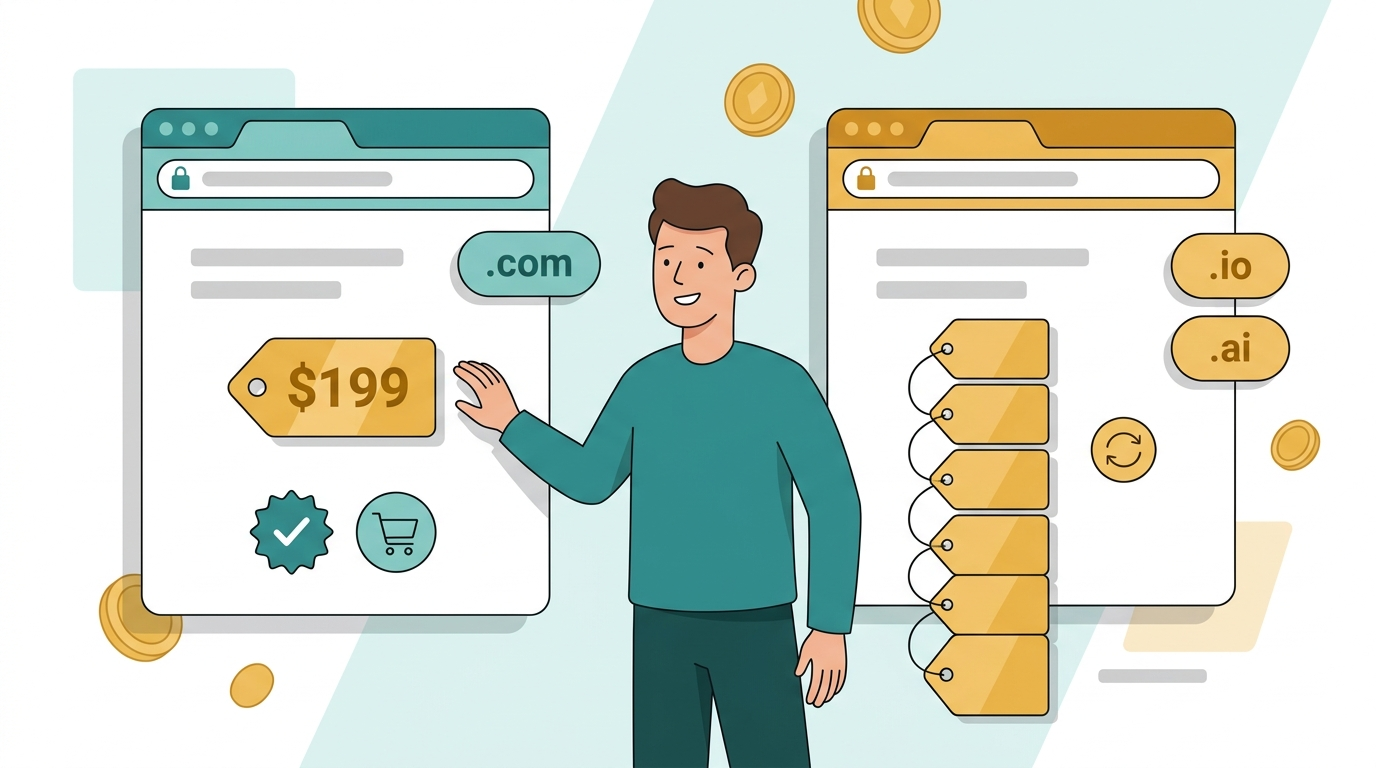
That's not a scandal — it's just how open-ended pricing works. But it's exactly why a hard ceiling is clarifying. When every name is $199 or less, there's no anchoring game, no "what will they pay," and no gap between the sticker and the real number. If you want the full breakdown of what actually drives a domain's price — length, TLD, keyword demand, brandability, comps — our domain valuation guide covers the six levers, and a fixed price is what removes the negotiation tax.
What an affordable brandable name looks like
The fear founders bring to a $199 marketplace is that the names must be leftovers. They're not — they're chosen for the same qualities that make any brand name work: they're short, easy to say and spell, they read cleanly, and they leave room to build a brand on top. The difference isn't quality; it's that they're priced to move instead of priced to anchor a negotiation, and they don't come with a logo you'll probably redesign anyway.
Here's a live sample of the brandable inventory in the marketplace right now — real names, real prices, updated automatically:
Notice what these have in common: they're the kind of names you could put on a landing page tomorrow without a single person asking you to spell it twice. That "say it once, spell it right" quality is the entire job of a brandable name — and it doesn't require a four-figure minimum or a bundled logo to get it. If you'd rather browse the full curated set, our brandable domains view shows everything live.
Which marketplace is right for you?
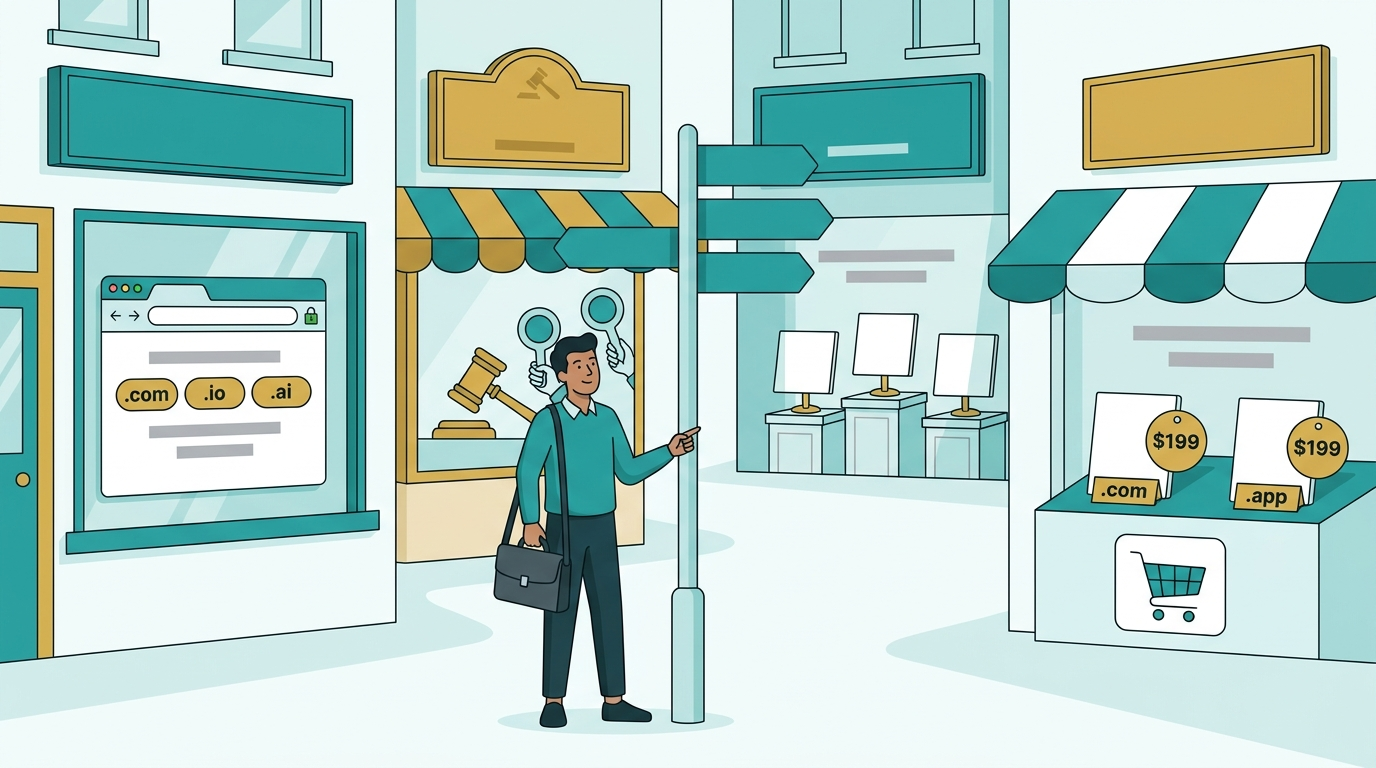
Forget the marketing on all three sides. The decision comes down to a few honest questions.
Choose Brandpa or BrandBucket when:
- You need a specific, ultra-brandable invented .com — the polished, made-up-word class — and no substitute will do
- You genuinely want the bundled logo and marketing polish on day one, and would otherwise pay a designer for it
- You're a funded startup, agency, or established brand with a real branding budget (four to five figures)
- A lease-to-own plan (BrandBucket) actually helps you afford a name you've decided is worth thousands
Choose 199.domains when:
- Your budget is hundreds, not thousands, and you'd rather spend the difference on building
- You want a clean, brandable name this week, without a $1,000 floor or an approval queue
- You value a single transparent price and a fast, guaranteed 72-hour transfer over a logo bundle
- You're an indie developer, bootstrapper, or early-stage founder who needs to launch, not to shop
- You want a name outside pure .com — a .ai, .io, .app, or .co — that the .com-only marketplaces don't stock
Honestly consider both when:
- You're early and unfunded now, but expect to raise later. Start on a $199-or-less name to launch and validate; if the company takes off and a perfect ultra-premium invented name becomes worth five figures with a logo, the upgrade path is always there. Our premium domains under $200 show how far a small budget actually goes, and if you ever need to move a name you've outgrown, the domain transfer guide covers the mechanics per ICANN's transfer policy.
The mistake isn't choosing Brandpa, and it isn't choosing BrandBucket, and it isn't choosing a $199 marketplace. The mistake is paying a four-figure minimum for curation, a logo, and marketing you didn't need when what you actually needed was a great name and a fast checkout — or, less commonly, trying to launch a funded consumer brand on a name you picked mostly because it was cheap. Match the venue to the job.
Browse brandable .com names under $200
Short, brandable names at a fixed price of $199 or less.
The bottom line
Brandpa and BrandBucket earned their reputations honestly. They're very good at one specific thing: selling polished, invented, logo-bundled brand names to buyers who can pay four figures and up, wrapped in curation and design that justify the cost at that level. If that's you, use them with confidence.
But most founders reading this aren't buying a $5,000 name with a logo attached. They're buying their first real name, on a budget, under a deadline, and they need it to be clean, brandable, and theirs by next week — logo to be figured out later. For that job, a marketplace with a $199 ceiling — every listing vetted, owner-verified, and transferable in 72 hours — isn't a compromise. It's the correct tool. And if you're on the other side of the table with names to sell, you can list them free and keep up to 81% instead of handing a quarter to a third of every sale to a commission and a logo you didn't draw.
Pick the marketplace that fits the problem you actually have. Then stop shopping and go build.