Every few weeks a founder asks me some version of the same question: "I found an expired domain with thousands of backlinks. Should I build the startup on it?"
The honest answer is usually no. Not because expired domains are bad, but because the thing that makes them attractive to SEO buyers is rarely the thing a startup needs. You need a name customers remember, say correctly and trust. A link profile is a nice extra. It is not a brand.
That said, there is a narrow case where buying an expired domain is exactly the right move, and a set of checks that separates a clean bargain from a name with a past you do not want. This guide gives you both, with the math laid out so you can decide in an afternoon rather than a month.
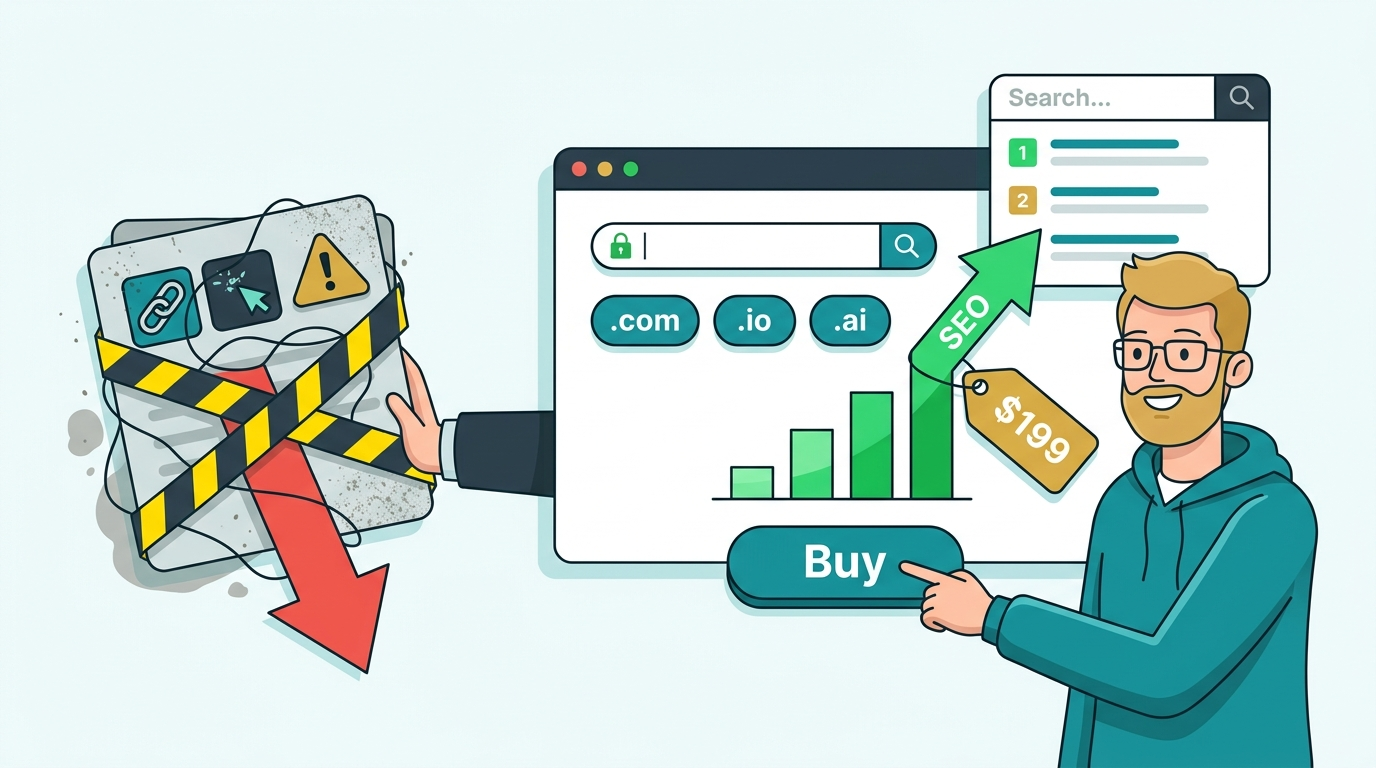
The expired domain pitch vs the reality for a brand
The pitch is simple. A domain that was registered and used for years has age, indexed history and inbound links from other sites. Buy it when it lapses, build on it, and you skip months of waiting for search engines to notice you.
Here is what that pitch leaves out when the buyer is a startup rather than an SEO operator.
| The pitch | The reality for a startup brand |
|---|---|
| "Aged domains rank faster" | Age alone is not a ranking factor you can buy. Relevant links help; links about a different topic mostly do not. |
| "It has thousands of backlinks" | Count means little. A handful of links from real, related sites beats thousands from link farms, and the farms are a liability. |
| "It already gets traffic" | Traffic to an old gardening blog will not convert for your fintech app. Most of it evaporates when the content changes. |
| "It's cheaper than a premium name" | Only if it drops unclaimed. Anything valuable is caught and resold, often at auction. |
| "You can redirect it for a boost" | Redirecting an unrelated expired domain to your site is exactly the pattern search engines are built to discount. |
Google put a name to the problem in March 2024. Its spam policies for Google web search now define expired domain abuse as buying an expired name and repurposing it mainly to manipulate rankings with content that offers little value to users. The examples it gives are blunt: casino content on a former elementary school site, affiliate content on a site previously used by a government agency.
The same announcement contains the sentence founders should actually remember. In Google's post on the March 2024 core update and new spam policies, it says it is fine to use an old domain name for a new, original site designed to serve people first.
That is the whole distinction. Buying an old name because it is the right name is fine. Buying it to borrow a reputation for something unrelated is the thing that gets hit. A deeper look at the SEO side, including redirects and aged-domain tactics, is in buying a domain for SEO: what actually works.
When buying an expired domain makes sense for a startup
After many years of buying, holding and selling names, my rule for founders is short: buy the expired domain only if you would buy it with zero backlinks.
If the name passes that test, an expired domain can be a genuinely good deal. The situations where it works:
1. It is the exact name you want, and it happens to be dropping
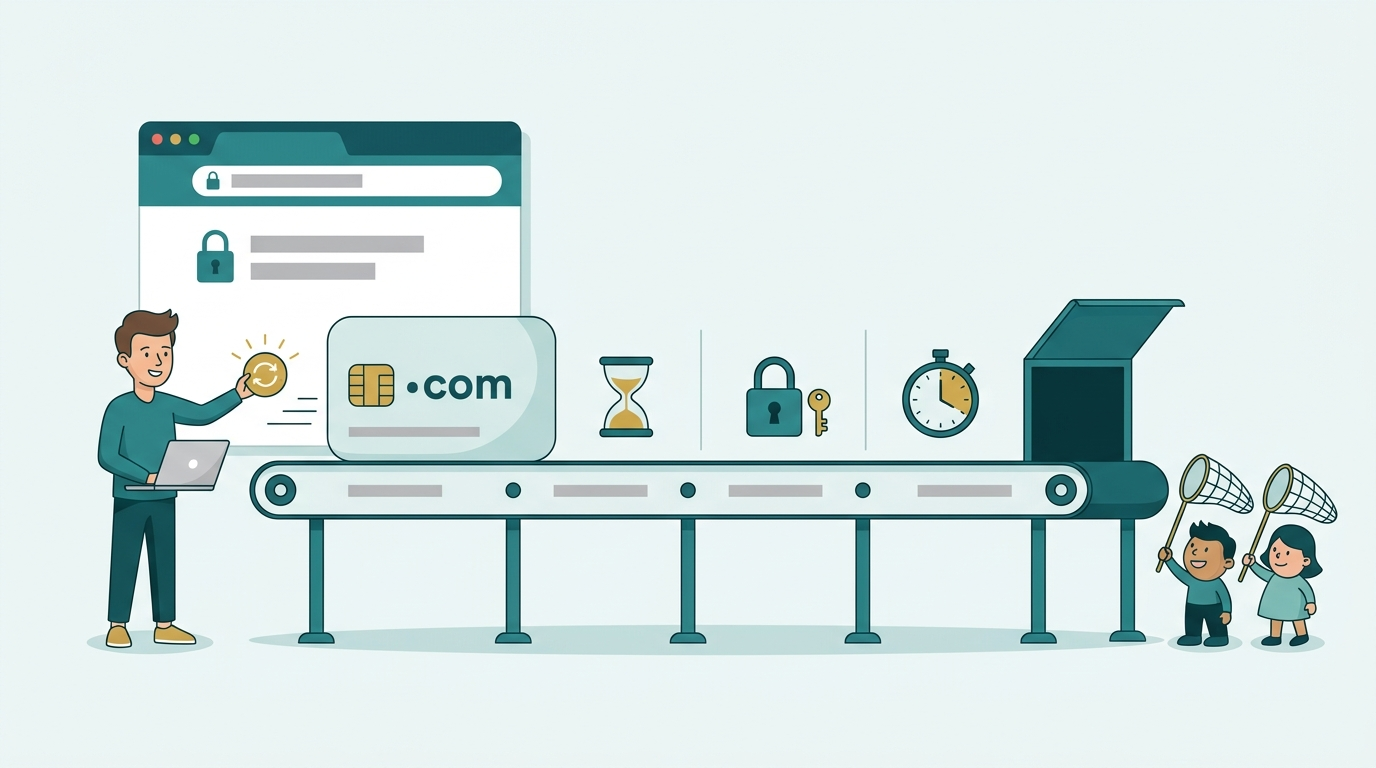
You have a brand in mind, the matching .com was registered by someone else, and it is now in its grace period or heading for a drop. This is the best case. You are not buying history; you are buying your name at the moment it becomes available. Understanding the timeline matters here, because a name can sell at a registrar auction before it ever drops. What happens when a domain expires walks through every stage.
2. The old site was in your space and ended cleanly
A small software company shut down, a newsletter in your niche stopped publishing, a local business in your trade retired. If the old content was legitimate and closely related to what you will build, the links pointing at it are relevant and some residual goodwill may carry over. That is the one version of the SEO pitch that holds up.
3. The history is short, boring or empty
Plenty of expired names were registered, parked and never used. No content, no links, no reputation. These are effectively fresh names, and if the name itself is good, there is nothing to fear.
When it does not make sense
- You like the backlinks more than the name.
- The old site covered an unrelated topic, or anything in adult, gambling, pharma or crypto-scam territory.
- The name contains or closely resembles someone else's brand.
- You are racing a deadline. Drops run on the registry's timeline, not yours.
The 20-minute vetting stack for any expired domain
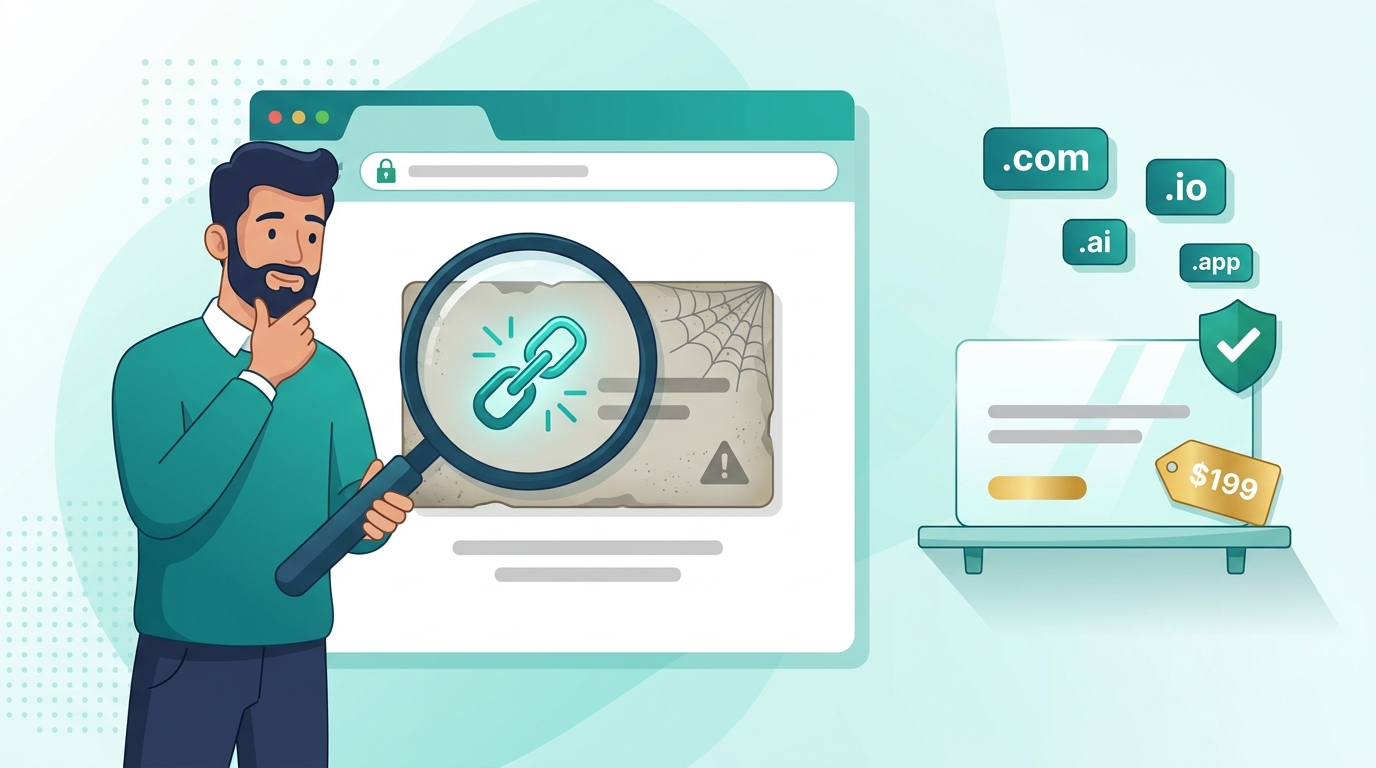
Before you place a backorder or a bid, run these five checks. None of them needs paid tools to get a first answer, and together they catch almost every bad buy I have seen.
| Check | What you are looking for | Where to look | Red flag |
|---|---|---|---|
| 1. Content history | What the site actually hosted, year by year | Internet Archive Wayback Machine | Casino, adult, pharma, spun articles, foreign-language doorway pages |
| 2. Backlink profile | Who links to it, with what anchor text | Any backlink checker (most offer a free lookup) | Anchors unrelated to the name, sudden link spikes, link-farm domains |
| 3. Spam and malware signals | Whether search engines or security vendors flagged it | site: search in Google, public URL-safety checkers |
Nothing indexed despite years of history, malware warnings |
| 4. Trademark exposure | Whether the name matches or resembles a live mark | National trademark databases | Exact or near match in your industry |
| 5. Email reputation | Whether the domain was used to send spam | Public email blocklist lookups | Listings on major blocklists |
Step 1: Read its past in the Wayback Machine
Enter the domain at the Internet Archive's Wayback Machine and open snapshots from several different years, not just the most recent one. You want continuity: the same kind of legitimate site over time. What you do not want is a sudden switch, for example a bakery that became a page of casino links in its final two years. That switch is the fingerprint of someone who already tried to exploit the name.
Step 2: Look at who links to it and why
Pull the backlink list and read the anchor text. Links that mention the old business by name, from related sites, are healthy. Anchors like "cheap pills", "best casino bonus" or strings in a language the site never published in are signs of paid or spammed links. A clean profile with fewer links beats a big dirty one every time.
Step 3: Check whether it is flagged
Search site:thedomain.com in Google. A name with a long active history and zero indexed pages can mean it was deindexed, which is a warning, not a bargain. Run the domain through a public URL-safety check as well; a malware history can linger in browser warnings.
Step 4: Clear the trademark question
Old names sometimes lapse because the owner lost a dispute, or because they were infringing all along. Under the UDRP, a trademark owner can take a domain back if it is identical or confusingly similar to their mark, the holder has no legitimate interest in it, and it was registered and used in bad faith. WIPO's guide to the UDRP explains the test in plain language. If the name maps to someone else's brand, walk away. The full clearance process is in the domain trademark clearance guide.
Step 5: Check the email reputation
This is the step almost every expired-domain guide skips, and it matters most for startups, because your domain is also your email. If the previous owner blasted spam from it, the name can sit on blocklists and your first sales emails may land in junk. Look the domain up on public blocklist checkers before you buy, and read why cheap names get flagged by email providers for how to warm up any new sending domain properly.
Investor's note: if a name fails any one of these five checks, I do not try to "fix" it. There are far too many clean names available to spend your launch cleaning up someone else's mess.
The horror cases: what a bad expired domain can drag in
Most expired names are harmless. The ones that are not tend to fail in one of these ways:
- Penalised past. A manual action from a search engine does not automatically vanish when ownership changes. The new owner inherits a site that is quietly suppressed and has to find out why.
- Private blog network history. Names that were part of a link network often carry a footprint that search engines already discount. Your brand starts life associated with a scheme.
- Adult, gambling or pharma content. Even years later, archived pages, old links and scraped copies keep that association alive. Customers who search your name can find it.
- Hacked or malware history. Security vendors and browsers may still warn visitors, which is fatal for a product that asks people to sign up.
- Trademark exposure. A UDRP complaint can take the domain from you after you have built a brand on it.
- Blocklisted for email. Your welcome emails, invoices and outreach land in spam, and you do not find out until conversion numbers look wrong.
Any one of these costs more than the name ever saved you.
Expired vs curated marketplace names: the cost, time and risk math
Here is the comparison that decides it for most founders. It sets the realistic ways to get an expired name against buying a name that is already checked and listed.
| Factor | Hand-register a dropped name | Backorder or drop-catch | Expired-domain auction | Vetted marketplace name (199.domains) |
|---|---|---|---|---|
| Upfront price | Standard registration | Backorder fee, plus auction if others backorder | Whatever the bidding reaches | $199 or less, shown up front |
| Chance of getting it | Low for any name with value | Moderate, and not guaranteed | Only if you outbid everyone | Immediate while listed |
| Time to own it | Weeks, tied to the drop date | Weeks, tied to the drop date | Days to weeks | Transfer starts within 72 hours |
| History risk | Yours to check | Yours to check | Yours to check | AI quality-vetted and owner-verified by DNS before listing |
| Price certainty | High, if you win the race | Low | Low | Fixed, no negotiation |
| Best for | Unwanted names nobody else is watching | One specific name you must have | Investors and SEO buyers | Founders who need a good name now |
The pattern is clear. Expired routes can be cheaper on paper, but they trade money for time and uncertainty. A founder's time in the weeks before launch is the scarcest resource in the company, so a name you can own this week at a known price is usually the better deal, even when an expired option looks cheaper at first glance.
If you are weighing what a fair price actually is, domain valuation explained covers why names land at $199, $1,999 or $19,999.
The verdict: a decision framework by use case
Use the project, not the backlinks, to decide.
| Your project | Should you buy an expired domain? | Why |
|---|---|---|
| Startup brand you plan to build for years | Only if it is the exact name you want and passes all five checks | The name matters; the history is a risk to manage, not an asset to chase |
| Relaunch of a closed business in the same niche | Often yes, after vetting | Relevant links and goodwill can carry over legitimately |
| Side project or weekend app | Rarely | Speed matters more than history; a clean, available name gets you shipping |
| Content or SEO project in the same topic as the old site | Possibly, with care | Continuing the same subject is the legitimate version; switching topics is the abusive one |
| Borrowing authority for unrelated content | No | This is the expired domain abuse pattern Google targets |
For most founders reading this, the answer lands in the first or third row. You want a short, memorable name you can build on, you want it soon, and you do not want to become an amateur forensic investigator to get it.
A faster way to a clean, memorable name
If the expired route feels like more homework than it is worth, skip it. Every listing on 199.domains is $199 or less, AI quality-vetted and owner-verified by DNS before it goes live, so the name has already been through checks before you see it. There is no drop to wait for, no backorder, and no bidding. A few from the current catalog:
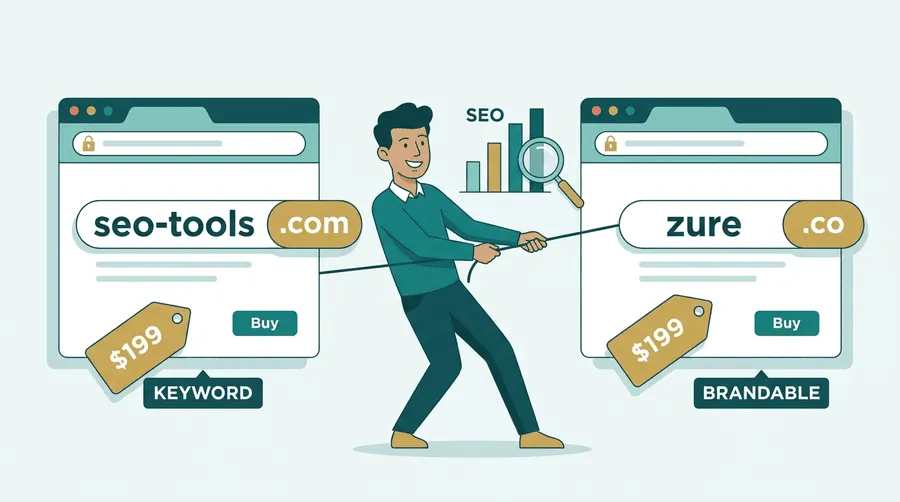
When you look through a grid like this, judge each name the same way you would judge an expired one, minus the history: is it short, is it easy to say and spell after hearing it once, and does it fit the kind of company you are building? If you like invented or compound names that can grow with a product, the brandable collection is the place to start.
The bottom line on buying expired domains
An expired domain is not a shortcut to rankings, and for a startup it should never be the reason you pick a name. Google has said plainly that using an old name for a new, original site is fine and that buying one to trade on its past for unrelated content is abuse. So the question is not "how many backlinks does it have?" but "is this the name I would buy anyway, and is its history clean?"
If the answer to both is yes, run the five checks, move quickly, and buy it. If either answer is no, let it go. Browse the full marketplace instead: every name is $199 or less, already vetted, and ready to transfer this week.